
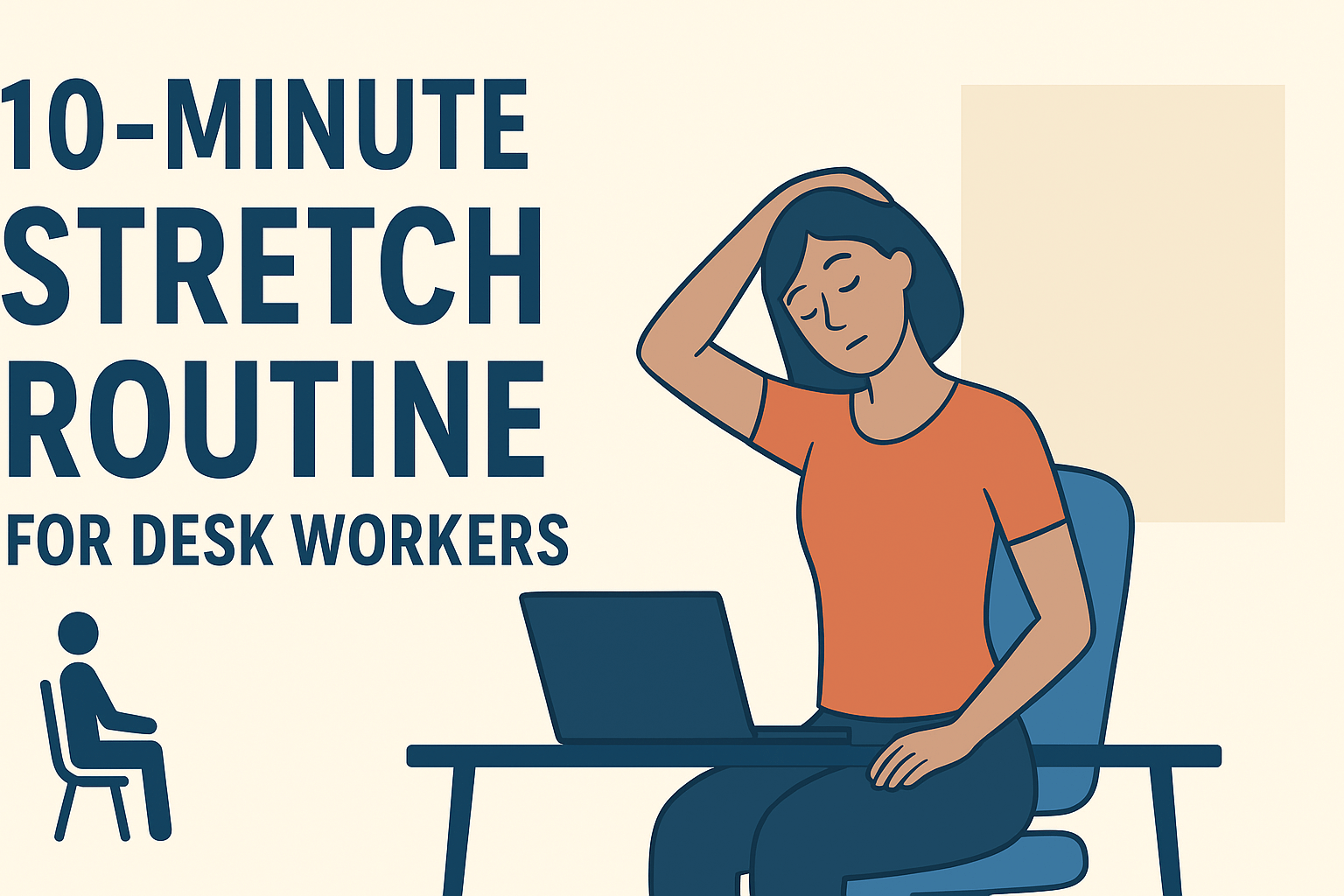
Most desk jobs involve long hours of sitting, steady screen focus, and minimal movement. This work pattern supports productivity, but it gradually affects posture, comfort, and mobility. Over time, the body begins to signal the stress created by static positions and repetitive tasks. Following a desk worker stretch routine can help relieve tension and improve daily comfort.
Everyday Strain of a Desk Worker
Desk workers commonly deal with stiff necks, rounded shoulders, wrist tension, tight hips, and lower-back discomfort. Long sitting hours shorten certain muscles while weakening others, leading to imbalances that affect both posture and energy levels. These daily aches often turn into persistent soreness that interferes with focus and overall well-being. Even small lifestyle adjustments like short movement breaks can help counter this strain. Reputable resources such as the CDC and Mayo Clinic highlight the benefits of frequent stretching and posture resets during work hours.
10-Minute Desk Worker Stretch Routine
This simple routine fits easily into a break, mid-day reset, or end-of-shift cooldown. No equipment is required, and each movement targets areas most affected by desk work.
1. Neck Release (1 minute)
Sit tall or stand steady. Tilt your head gently to the right, bringing your ear toward the shoulder, and hold for 20 seconds. Repeat on the left. Finish by dropping your chin toward your chest for another 20 seconds.
Benefit: Eases neck stiffness from forward-leaning posture.
2. Shoulder Rolls + Chest Opener (1.5 minutes)
Roll your shoulders backward 10 times and forward 10 times. Then clasp your hands behind you (or hold a chair back) and lift your chest while pulling your shoulders back. Hold for 30 seconds.
Benefit: Reverses shoulder rounding and opens tight chest muscles.
3. Seated Spinal Twist (1 minute)
While sitting upright, place your right hand on your left knee and rotate your torso left. Hold 20 seconds, then switch sides.
Benefit: Reduces tension along the mid-back created by long sitting hours.
4. Wrist and Forearm Stretch (1 minute)
Extend your arm forward, palm facing outward, and gently pull your fingers back with the opposite hand. Hold 15 seconds, switch sides, then repeat with fingers pointing downward.
Benefit: Relieves tightness caused by constant typing and mouse use.
5. Cat-Cow Stretch (1.5 minutes)
Place your hands on your thighs. Arch your back and lift your chest (Cow), then round your spine and drop your chin (Cat). Repeat slowly for one minute.
Benefit: Improves spinal mobility and supports a neutral posture.
6. Hip Flexor Stretch (1.5 minutes)
Stand beside a chair. Step one foot back into a small lunge, keep hips square, and lean forward slightly until you feel the stretch. Hold 30 seconds per side.
Benefit: Releases tight hip flexors that contribute to lower-back pain.
7. Hamstring Stretch (1 minute)
Extend one leg forward with the heel on the floor. Hinge gently at the hips while keeping your back straight. Hold 20–30 seconds, then switch.
Benefit: Loosens tight hamstrings and helps correct pelvic alignment.
8. Upper Back Wall Stretch (1 minute)
Stand facing a wall and place your hands at shoulder height. Step back and lower your upper body until your arms extend fully. Hold 30–40 seconds.
Benefit: Reduces upper-back tension and helps reset posture after long screen time.
Why Consistency Matters
Doing this desk worker stretch routine once brings temporary relief, but practicing it daily helps restore alignment, improve flexibility, and reduce recurring pain. Adding small habits—like standing every 45–60 minutes or adjusting your screen height—further reduces stress on your body. Additional ergonomic tips and posture advice can be found on trusted sources such as NIH.
If you’re building a wellness habit, exploring more self-care and health-related topics can provide helpful support. You can also browse useful health content on your internal site: Cheap Pills Store.
Incorporating just ten minutes of stretching into your day can make long work hours far more comfortable. With consistent effort, desk workers can maintain better mobility, reduce aches, and stay more energized throughout the day.